Guide · · 5 min read
When to See the Milky Way in Vietnam
Three conditions must line up: the galactic core in the sky, the Moon below the horizon, and a night without rain.
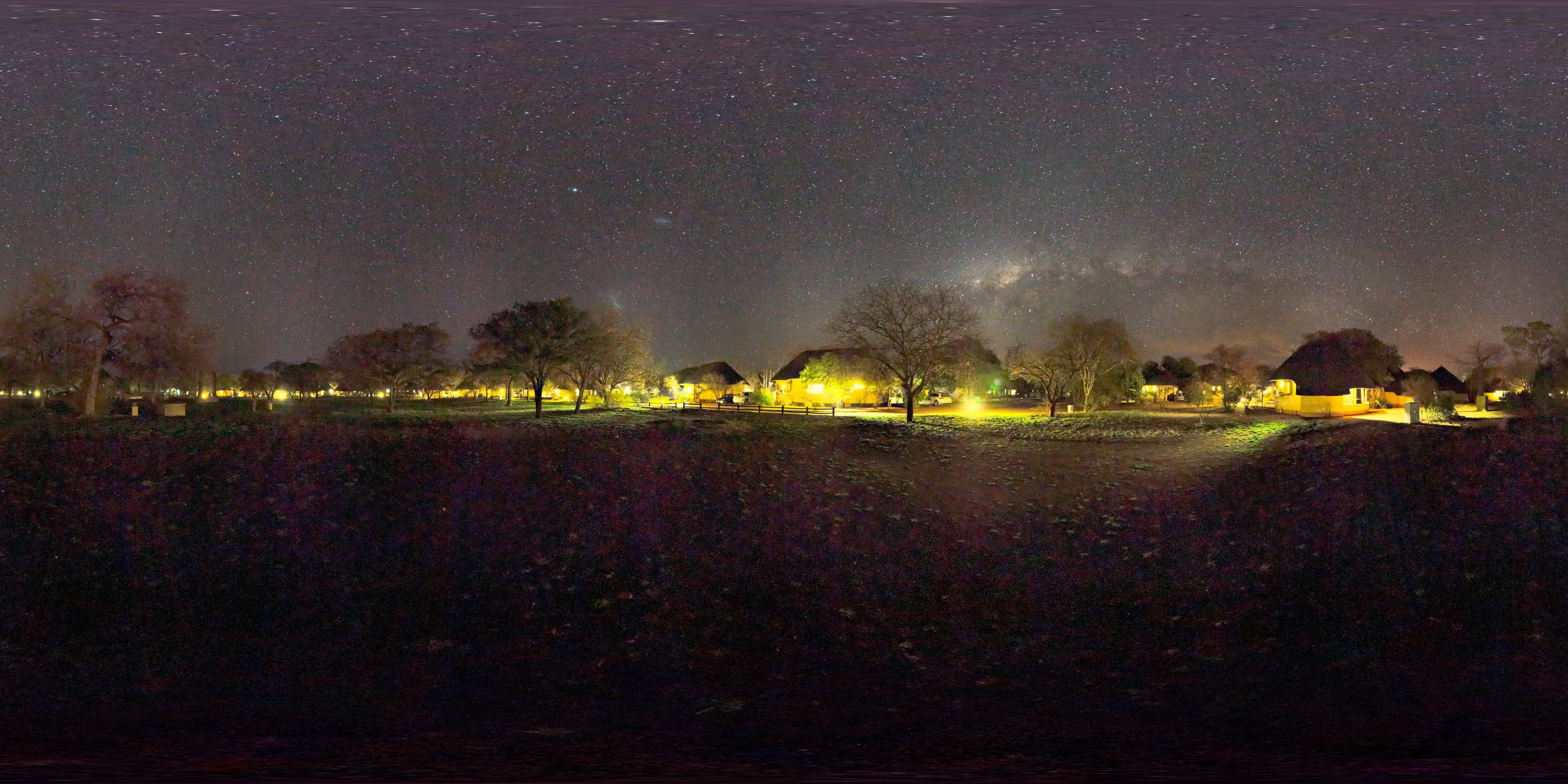
Greg Zaal / Poly Haven · CC0
The Milky Way is in the sky on almost every night of the year. What people usually want to see is the galactic core, towards Sagittarius and Scorpius, where the band is densest and most structured. Seeing it well requires three conditions to line up.
First: core season
The galactic centre lies at a declination of about −29°, so from Vietnam it always sits in the southern sky. From Ha Giang, at roughly 23° north, it peaks at only about 38° altitude; from Con Dao, near 9° north, it climbs to about 52°. The further south you go, the higher the core rides and the less it is dimmed by the thick air near the horizon.
By the calendar, the core begins to appear before dawn from around February. In April and May it rises after midnight. June and July are when it is up for most of the night. In August and September it is already high at dusk and sets progressively earlier, until by late October it is nearly lost in the evening twilight.
Second: the Moon
A nearly full Moon can brighten the sky to suburban levels. Aim for the week around new moon, or the hours when the Moon has set or not yet risen. Our map shows the lunar phase for each night so you can check it when booking.
Third: weather
This is the difficult part in Vietnam. The core is best placed from May to September, which is also the rainy season across most of the north, the Central Highlands and the south. The most practical months therefore tend to be where the two seasons overlap:
The north: March to May, before the heavy rains, and September to October as the air dries, although by then the core is visible only in the first hours of the evening.
The Central Highlands and the south: February to April, if you are willing to rise at three or four in the morning.
The south-central coast, especially Ninh Thuan: rainfall is low all year and the short wet season falls roughly between September and November, which makes June to August here one of the best windows in the country.
The central coast from Quang Binh to Phu Yen: the dry season runs roughly from February to August, a good match with Milky Way season.
A caution
These dates are a frame of reference, not a promise. A monsoon surge, a humid week or smoke from field burning can wipe out a plan. Keep a few days of flexibility, check the cloud forecast close to departure, and treat each clear night as a gift rather than a certainty.
Comments
00No comments yet. Be the first.